
Here’s the truth: where you place your tattoo matters more than you think. Some spots barely register on the pain scale, while others can make even the toughest person wince.
For those in a hurry here’s breakdown showing pain ranking:
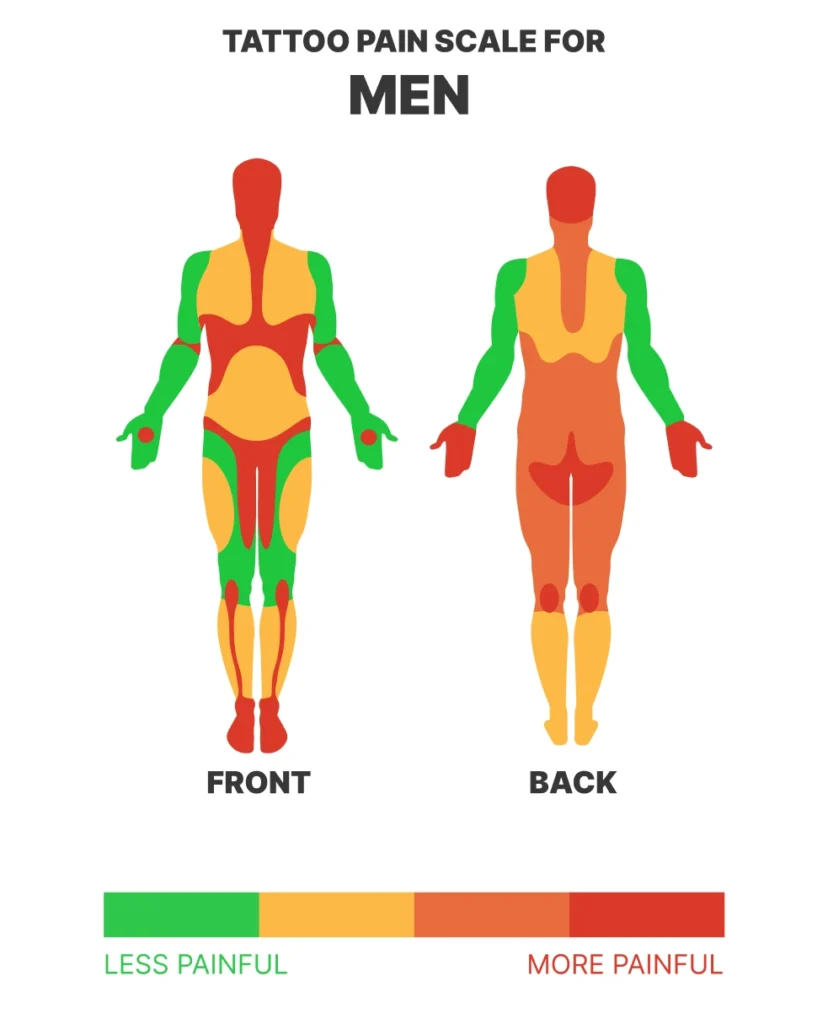
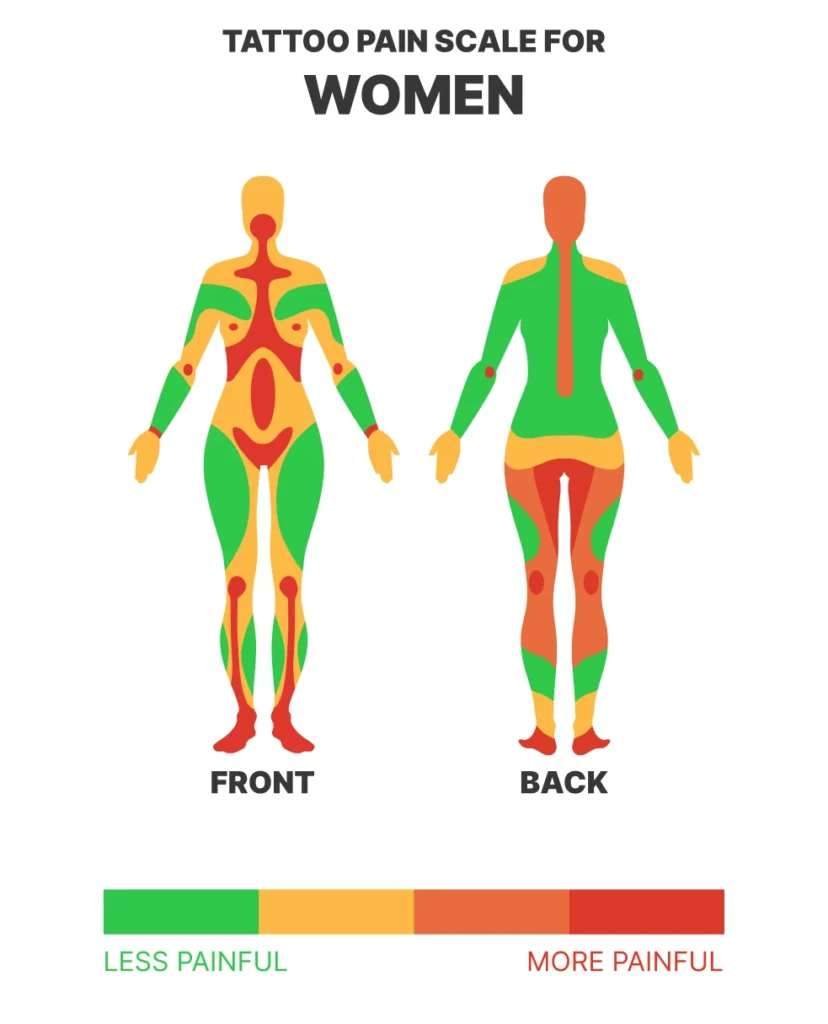
Men and women experience tattoo pain differently depending on placement. Differences in fat distribution, muscle mass, and skin thickness mean that certain areas tend to be more sensitive for one sex than the other.
The least Painful place for tattoo is:
Outer Shoulder and Upper Arm
This wins the prize for least painful tattoo location. Both for men and women, your deltoid muscle provides excellent padding while thick skin minimizes nerve sensitivity.
Most people describe the sensation as a mild scratching feeling rather than genuine pain. You’ll have enough muscle and fat here to create a natural cushion between the needle and your humerus bone.
Why artists love this spot: It’s a flat, stable surface that doesn’t shift much during the session. This means cleaner lines and less need for touch-ups.
First-timers should seriously consider starting here. You can test your pain tolerance without overwhelming yourself, and you’ve got plenty of real estate for designs ranging from small symbols to elaborate sleeve beginnings.
Factors That Influence Your Tattoo Pain Level
Not everyone experiences tattoo pain identically. Your best friend might sail through a spine tattoo while you struggle with an ankle piece.
Individual variables include:
| Factor | How It Affects Pain |
|---|---|
| Skin Thickness | Thicker skin = less nerve exposure |
| Body Fat Percentage | More cushioning = reduced bone contact |
| Muscle Development | Acts as shock absorber for needle |
| Age | Younger skin typically more resilient |
| Hydration Level | Well-hydrated skin handles needles better |
| Stress Level | Anxiety amplifies pain perception by 40% |
| Time of Day | Morning sessions often hurt less (higher pain tolerance) |
FAQ
The outer shoulder and upper arm consistently rank as the least painful locations due to thick skin, substantial muscle padding, and minimal bone contact.
Different pain entirely. Piercings deliver sharp, intense pain for seconds. Tattoos create sustained discomfort lasting minutes to hours, but at lower intensity.
Yes, typically. Your skin becomes inflamed and tender, endorphins deplete, and you mentally fatigue. The first hour usually feels easiest.
Outlining generally causes sharper, more intense pain because artists use liner needles that penetrate quickly. Shading feels like sustained pressure or burning—uncomfortable but duller.
Not inherently, but color work often requires more passes over the same area, extending your pain exposure. Vibrant colors may need extra saturation passes.
